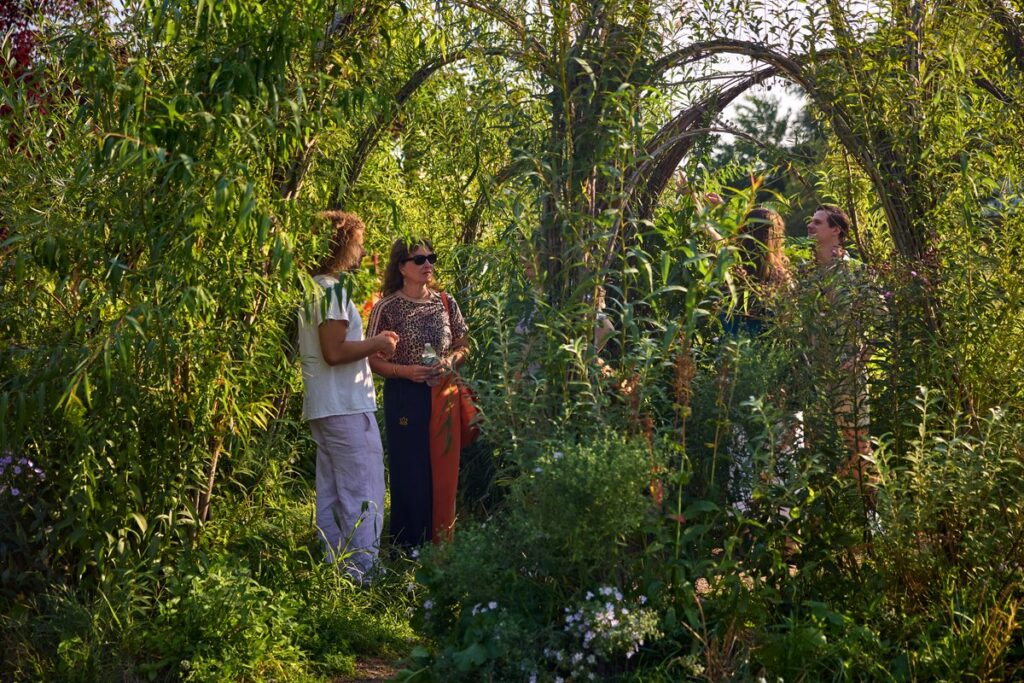
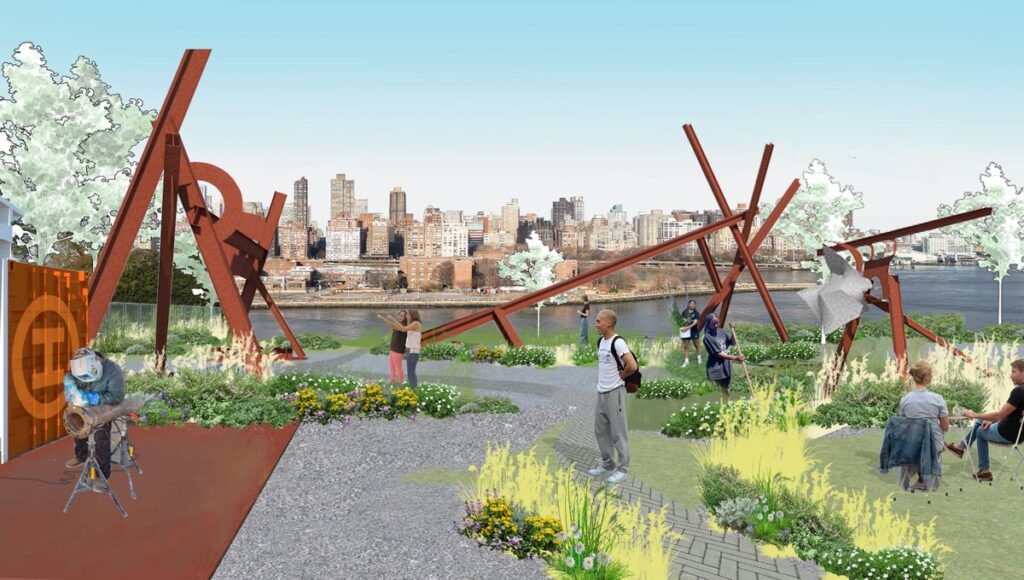
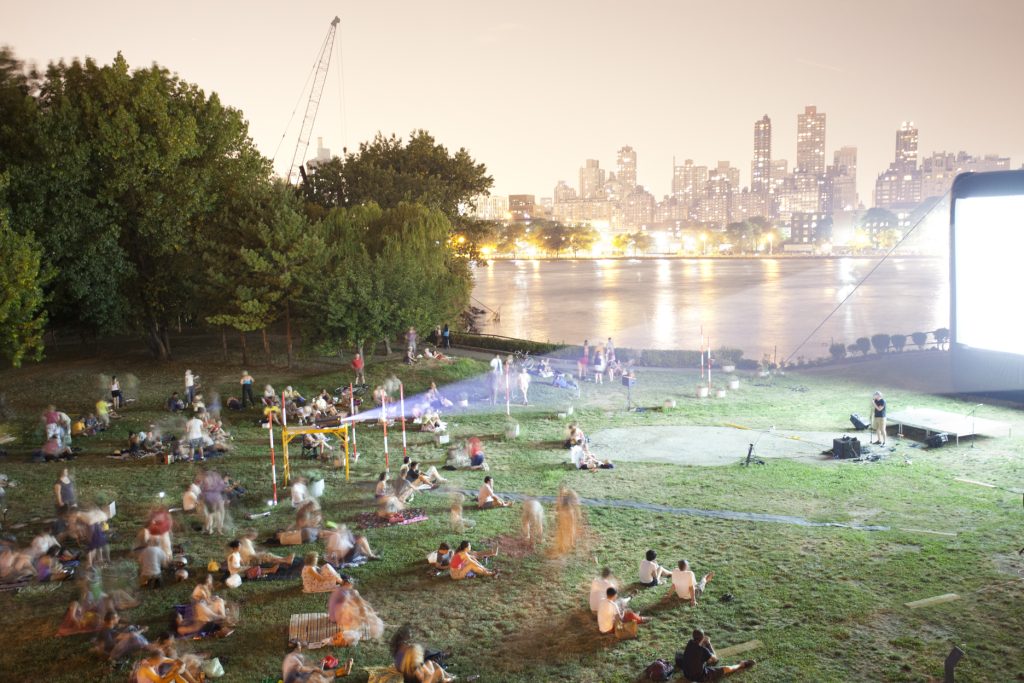
Mary Mattingly (b. 1978) is an interdisciplinary artist who cares deeply about water and believes in the power of public art. She founded Swale, an edible landscape on a public barge in New York City. Recent public art projects include Limnal Lacrimosa in Glacier National Park, Public Water with +More Art in New York, Vanishing Point with Metal Southend and Focal Point Gallery in the UK. Mattingly has exhibited sculpture and photography at the Cuenca, Istanbul, and Havana Biennials, as well as institutions such as Storm King, the International Center of Photography, the Seoul Art Center, the Brooklyn Museum, and the Palais de Tokyo. She has received grants and foundations such as the James L. Knight Foundation, the Harpo Foundation, the Jerome Foundation, and the Art Matters Foundation. Her work has also been featured in publications like Aperture Magazine, Art in America, Sculpture Magazine, The New York Times, Le Monde Magazine, and on Art21. It has been included in books such as the Whitechapel/MIT Press Documents of Contemporary Art series titled “Nature”, and Henry Sayre’s “A World of Art”, 8th edition, published by Pearson Education Inc. In 2022, a monograph of her work titled “What Happens After” was published by the Anchorage Museum and Hirmer.
メアリー・マッティングリー
Artworks
展示
Scanned Documents
Videos
Video Title Lorem Ipsum
オーラル・ヒストリー
Mary Mattingly discusses her exhibition Ebb of a Spring Tide and Water Clock
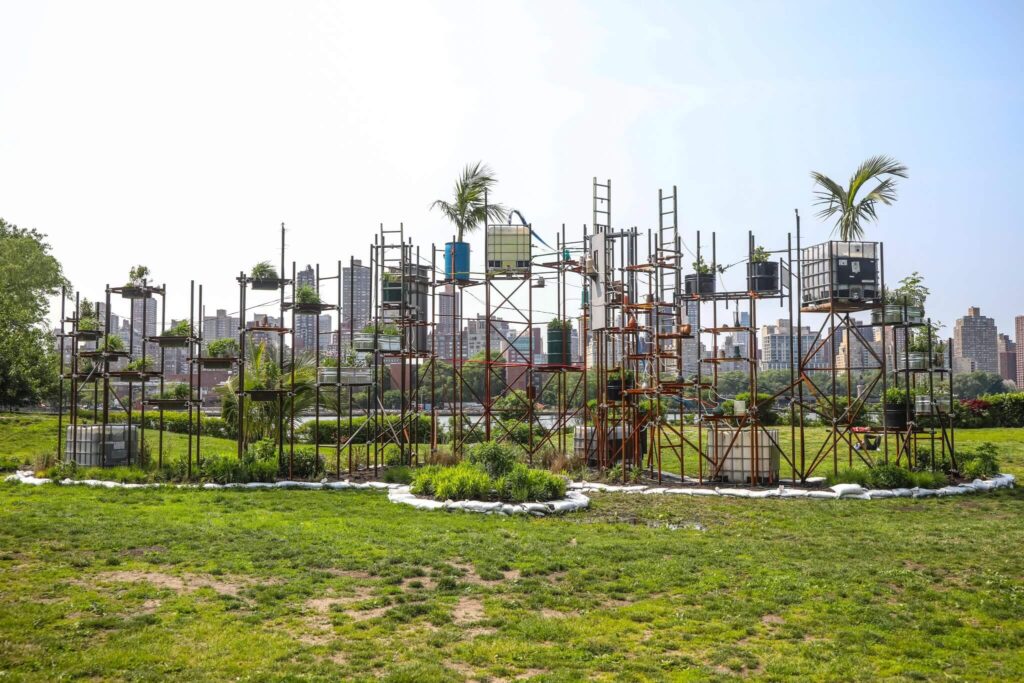
Mary Mattingly: Flock House is a project I started in 2012, small spheres or habitats that plug into existing infrastructure. Often times utilizing excess from the surrounding buildings. They had portable gardens, solar units, and everything to make a small modular system habitable. I imagine that they would be more and more relevant with the displacement due to weather events, desertification, and rising sea levels as cities would begin to operate more informally. Sharing resources like energy systems and water collection systems. While I grew up on the East Coast, I’ve lived all over the country and beyond. And these itinerant Flock Houses structures felt especially relevant to me, as I often carried around my possessions – which are such a weight, sometimes – to another temporary dwelling, for work or for a residency, always returning to home in New York.
The flock house felt like home again after I moved from the flooding apartment and searched for a new home in a city with rising rents and a dearth of available units. This summer I will inhabit the flock house at different times, and use it as a studio. In part, I’ll work on photographic project, experimenting with a dye garden and a photographic garden for help developing black and white prints. Please join me later in the summer, for photographic workshops.
Hide Transcript
Mary Mattingly Discusses flock house
Mary Mattingly: Flock House is a project I started in 2012, small spheres or habitats that plug into existing infrastructure. Often times utilizing excess from the surrounding buildings. They had portable gardens, solar units, and everything to make a small modular system habitable. I imagine that they would be more and more relevant with the displacement due to weather events, desertification, and rising sea levels as cities would begin to operate more informally. Sharing resources like energy systems and water collection systems. While I grew up on the East Coast, I’ve lived all over the country and beyond. And these itinerant Flock Houses structures felt especially relevant to me, as I often carried around my possessions – which are such a weight, sometimes – to another temporary dwelling, for work or for a residency, always returning to home in New York.
The flock house felt like home again after I moved from the flooding apartment and searched for a new home in a city with rising rents and a dearth of available units. This summer I will inhabit the flock house at different times, and use it as a studio. In part, I’ll work on photographic project, experimenting with a dye garden and a photographic garden for help developing black and white prints. Please join me later in the summer, for photographic workshops.
Hide Transcript