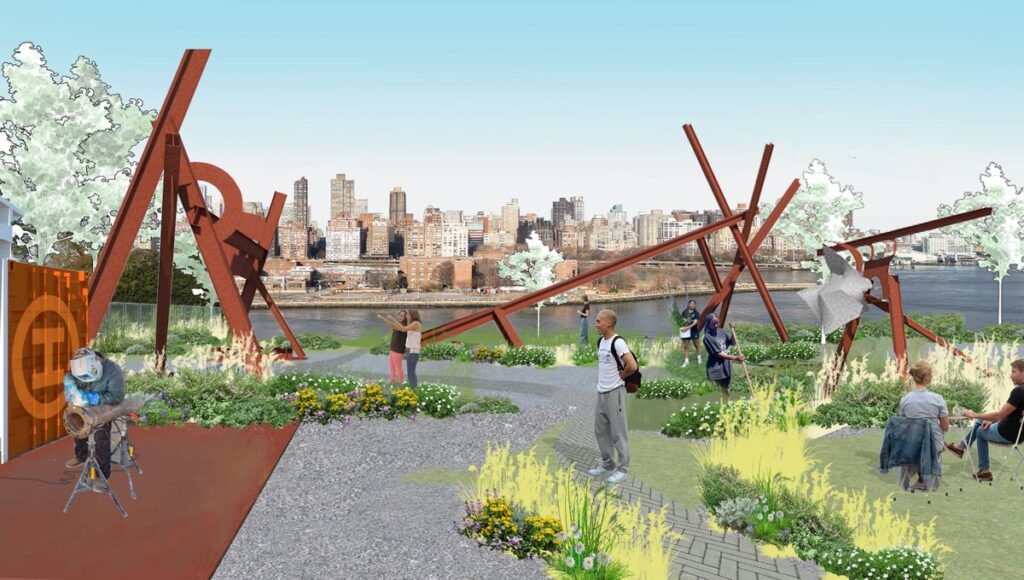
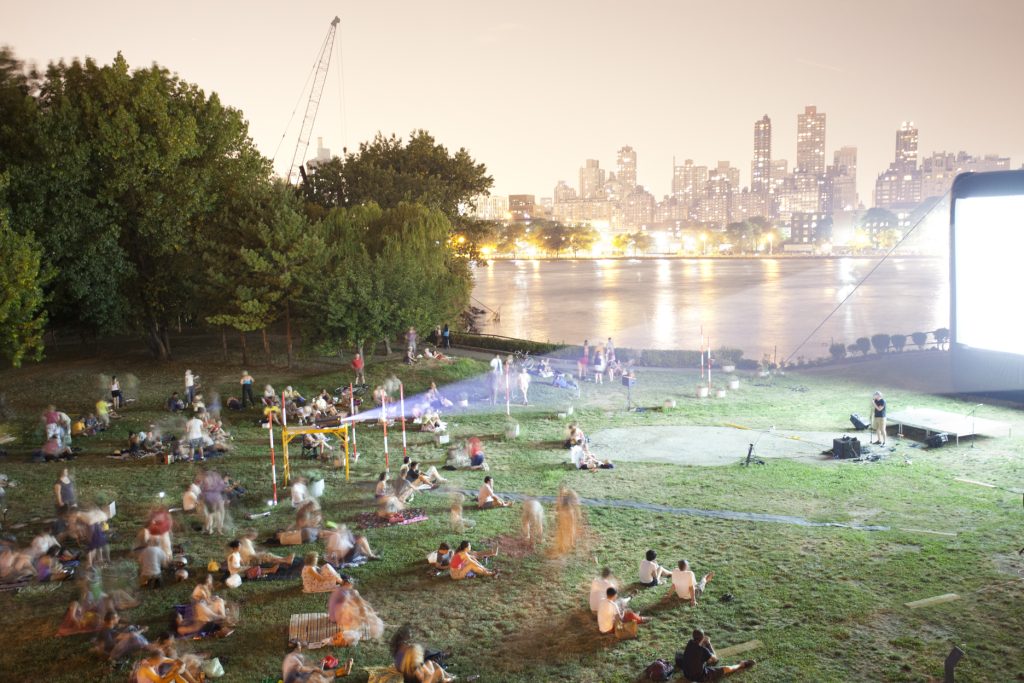
Bassa marea di una marea di primavera is an exhibition of new sculptural works by Mary Mattingly exploring our relationship to coastal ecosystems and the shifting nature of rivers and water lines.
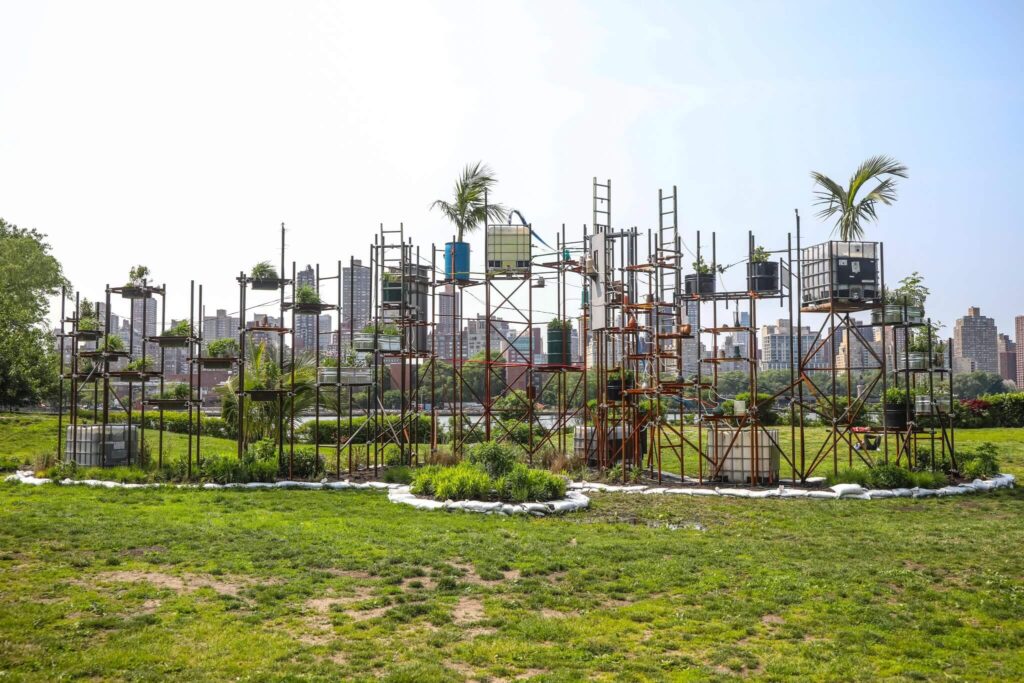
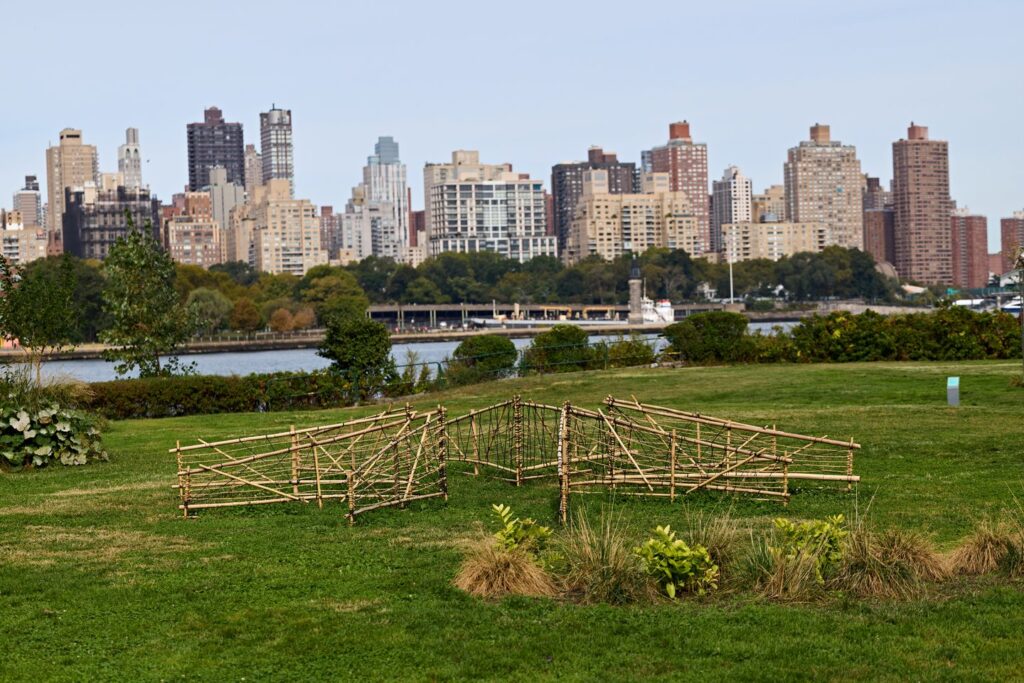
The exhibition will feature a 65-foot living sculpture titled Water Clock, fabricated on-site in response to the Park’s unique waterfront location along the East River. This monumental, scaffold structure, which includes edible vegetation, mirrors the cityscape across the East River, highlighting the human impact on New York City’s riparian zone. The clock’s pulse is kept by water from the East River moving through tubes on the structure, a reminder of a life support system and the delicate balance of coastal ecosystems.
According to Mattingly, “Water Clock is a tribute to the power of water, time, and the life force of this riparian edge. It vocalizes tidal shift with a composition for the twice-daily rise and fall of the oceans, brought on by the lunar cycle and unfurled by this climate crisis.”
At Socrates, as for so many other areas in the City, the land is under constant and direct threat from the impact of climate change. Central to the work is the way it refers to the shifting nature of rivers and water lines, and how the East River is not just a line on a map but an integral part of a larger water cycle. For all visitors, the work brings awareness to and highlights the impending threat of sea level rise in this neighborhood. At the same time it seeks to inspire hope that we can prepare for a changing world through innovative design and a restorative relationship with nature.
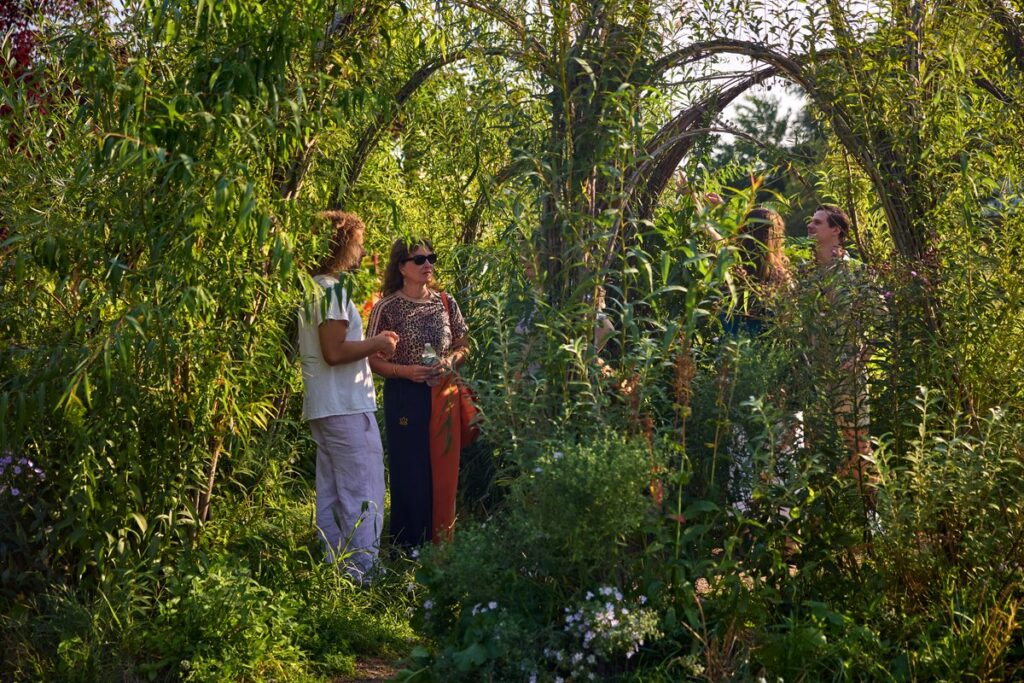
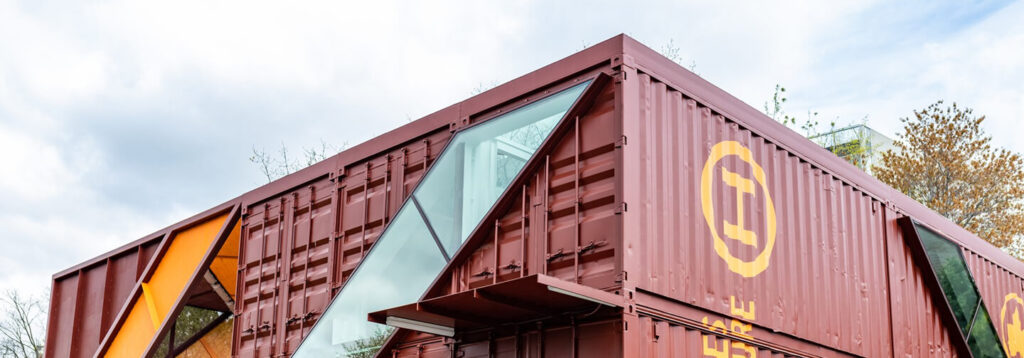
The exhibition also includes a Flock House, expanding on the artist’s ongoing series of mobile, self-sufficient living systems that challenges notions of home and community. Designed to be adaptable, this dynamic structure acts as a growing, making, and eventual living space to fit the evolving needs of the project. Visitors will have the opportunity to engage with the Flock House through a series of workshops and activations throughout the summer.
Mary Mattingly discusses her exhibition Ebb of a Spring Tide and Water Clock
Topics
00:50 — 01:30
02:02 — 04:10
Mary Mattingly: Flock House is a project I started in 2012, small spheres or habitats that plug into existing infrastructure. Often times utilizing excess from the surrounding buildings. They had portable gardens, solar units, and everything to make a small modular system habitable. I imagine that they would be more and more relevant with the displacement due to weather events, desertification, and rising sea levels as cities would begin to operate more informally. Sharing resources like energy systems and water collection systems. While I grew up on the East Coast, I’ve lived all over the country and beyond. And these itinerant Flock Houses structures felt especially relevant to me, as I often carried around my possessions – which are such a weight, sometimes – to another temporary dwelling, for work or for a residency, always returning to home in New York.
The flock house felt like home again after I moved from the flooding apartment and searched for a new home in a city with rising rents and a dearth of available units. This summer I will inhabit the flock house at different times, and use it as a studio. In part, I’ll work on photographic project, experimenting with a dye garden and a photographic garden for help developing black and white prints. Please join me later in the summer, for photographic workshops.
Hide Transcript